
A mini fridge sounds like a simple purchase until you start comparing them. One model may fit neatly beside a desk but barely hold anything. Another may have plenty of room but take up more floor space than expected. Then there is the freezer question: do you actually need one, or would that space be better used for drinks and food?
The best mini fridge depends heavily on how you plan to use it.
For a dorm or bedroom, size and noise can matter more than maximum capacity. An office fridge may need better organization for lunches and drinks. If you’re mainly storing beverages, a dedicated beverage refrigerator can make more sense than a traditional mini fridge.
I compared current models across several sizes and use cases, focusing on specifications from manufacturers and established product research rather than simply picking the most popular-looking Amazon listing.
Note: Prices and Amazon availability can change frequently. Check the current Amazon listing before buying.
| Mini Fridge | Best For | Capacity | Key Advantage |
|---|---|---|---|
| Midea WHD-113FSS1 | Overall | 3.1 cu. ft. | Separate freezer and reversible door |
| Upstreman BR321 | Value | 3.2 cu. ft. | Large capacity with compact footprint |
| BLACK+DECKER BCRK25B | Dorms & offices | 2.5 cu. ft. | Full-width freezer and glass shelves |
| Midea WHS-65LB1 | Small spaces | 1.6 cu. ft. | Compact Energy Star design |
| Frigidaire EFR492 | Maximum storage | 4.5 cu. ft. | More usable refrigerator space |
| Whynter BR-130SB | Drinks | 3.1 cu. ft. | Beverage-focused design with 5 shelves |
Choosing the right mini fridge comes down to where you’ll use it and what you plan to store. Keep these factors in mind before buying.
Think about how much food and drink you normally store. Around 1–1.7 cu. ft. works well for personal use, while 3–4.5 cu. ft. is better for regular food storage.
Measure the width, height, and depth of your available space before ordering. Also check the door swing and required ventilation clearance.
Decide whether you actually need a freezer. A small freezer is useful for ice and frozen snacks, but it can reduce the space available for fresh food.
Look for adjustable temperature control, especially if you’ll be storing food regularly. A refrigerator thermometer can help you check the actual internal temperature.
For bedrooms and quiet offices, check the manufacturer’s noise rating when available. A quieter model is generally more suitable for spaces where you’ll be sleeping or working.
Removable or adjustable shelves make it easier to store taller bottles and food containers. Also check the door bins and whether there’s a crisper drawer.
If the fridge will run all year, energy consumption matters. Look for Energy Star certification and published annual energy-use information when available.
A reversible door can make placement easier in tight spaces. Before buying, also check the manufacturer’s warranty and support for the exact model.
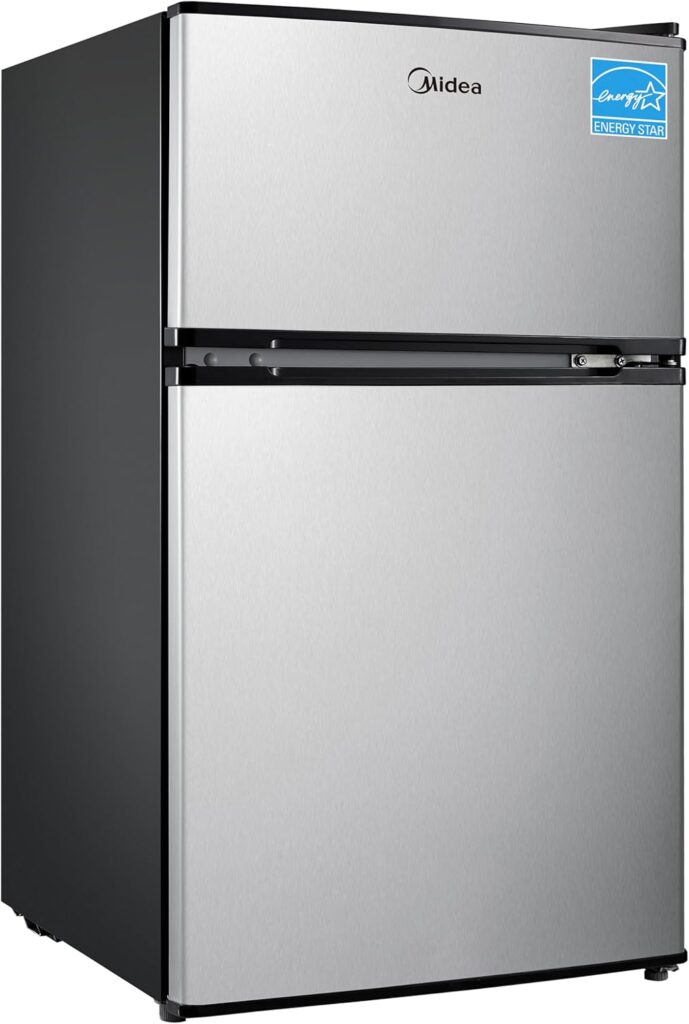
The Midea WHD-113FSS1 3.1 cu. ft. Double Door Compact Refrigerator is one of the most balanced choices if you want a mini fridge that feels more like a small refrigerator than a basic drink cooler.
It has separate refrigerator and freezer doors, which is useful when you regularly store both fresh and frozen food. Midea specifically positions this model for dorms, offices, game rooms, and other compact spaces.
The separate freezer compartment is the biggest advantage here. Many small refrigerators squeeze a tiny freezer box into the main compartment, which can make the refrigerator section harder to organize.
The WHD-113FSS1 instead uses a full-width freezer, giving frozen foods their own area. It also has a reversible door, so the opening direction can be changed depending on where you place the fridge.
That combination makes it a particularly practical option for someone who wants everyday food storage rather than just cold drinks.
The 3.1-cubic-foot capacity is a useful middle ground. It’s substantially more practical than a 1.6-cubic-foot personal refrigerator without moving into the size of a full apartment refrigerator.
The reversible-door design is another small but meaningful feature. In a tight dorm or office, where the fridge has to fit between furniture, being able to change the hinge side can make installation easier.
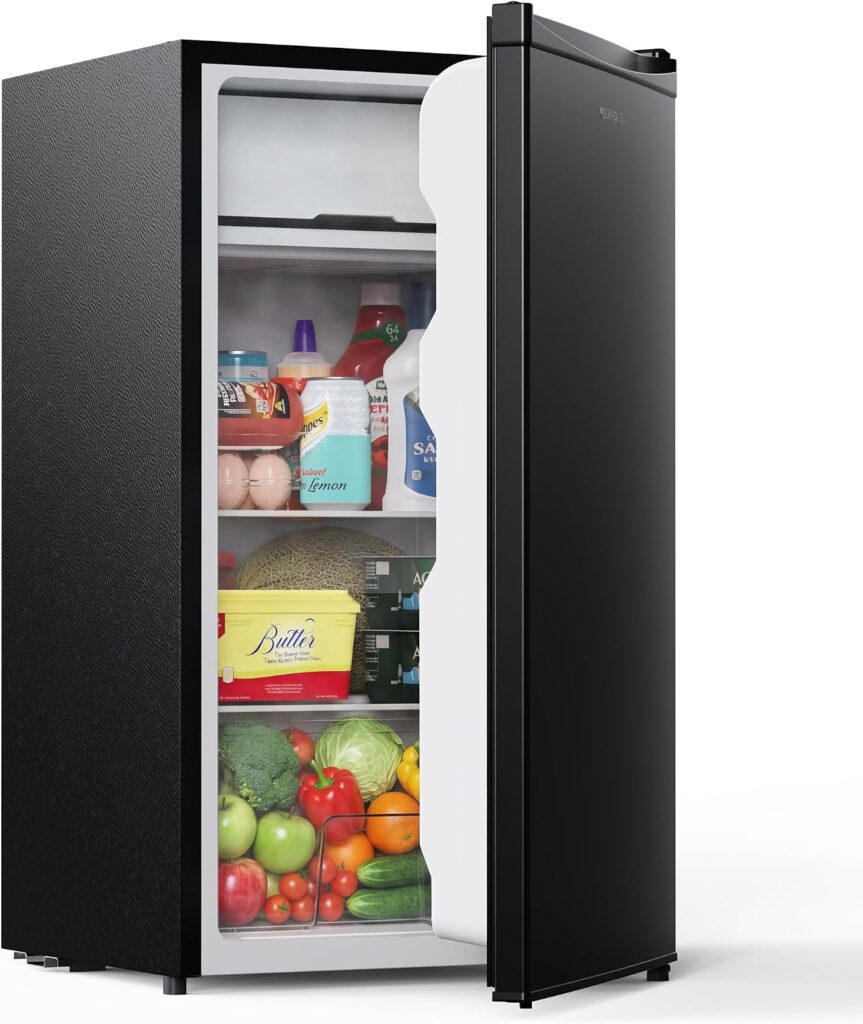
The Upstreman BR321 is a 3.2-cubic-foot compact refrigerator designed around the features most people actually look for in a larger mini fridge.
According to the available product specifications, it has 2.9 cubic feet of refrigerator space and a 0.3-cubic-foot freezer, along with two shelves and a crisper drawer. The listed dimensions are approximately 18.7 inches wide, 17.4 inches deep, and 33.1 inches high.
Capacity is the main reason to consider the BR321.
At 3.2 cubic feet, it gives you considerably more room than the small 1.6-cubic-foot class without becoming a full-size refrigerator. The freezer compartment also adds flexibility for ice or a small amount of frozen food.
The model is listed at 38 dB, with an annual energy consumption figure of 206 kWh in the available specifications.
The layout is practical for everyday storage. A crisper drawer helps separate produce from the rest of the refrigerator, while the removable shelves give you some control over how the interior is arranged.
The reversible door is also useful in rooms where the available floor plan is awkward.
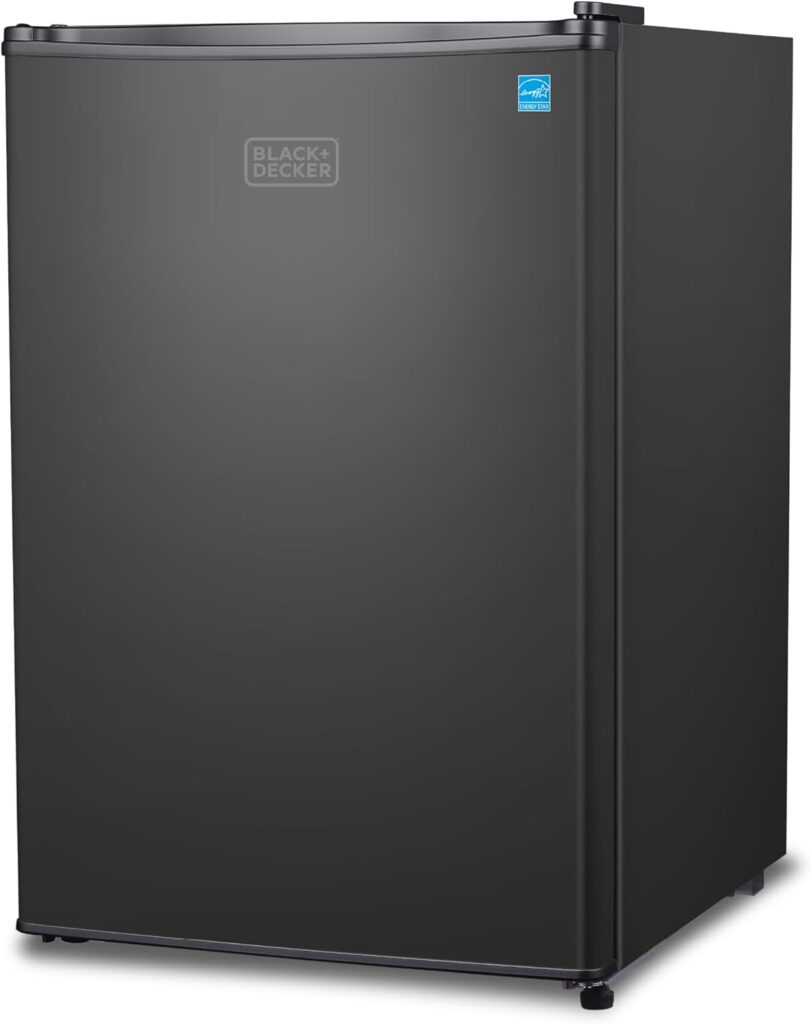
The BLACK+DECKER BCRK25B offers 2.5 cubic feet of storage and focuses on straightforward food and beverage storage.
The manufacturer lists it specifically for dorm rooms, offices, bedrooms, workshops, and other small spaces. It includes two full-width slide-out glass shelves, a full-width freezer compartment, an ice cube tray, and adjustable thermostat control.
The interior organization is better thought out than you might expect from a 2.5-cubic-foot refrigerator.
The two glass shelves can be removed or repositioned, while the door includes storage for a 2-liter bottle and space for cans. The freezer runs across the width of the upper compartment rather than being a tiny box attached to the side.
The glass shelves are useful if you’re storing food containers rather than just cans.
BLACK+DECKER also includes a reversible door, adjustable leveling legs, and a flat-back design. Those details can make a difference when you’re trying to fit the refrigerator into a small room.
The manufacturer lists a one-year warranty for labor and parts, with two years of coverage for the compressor part.
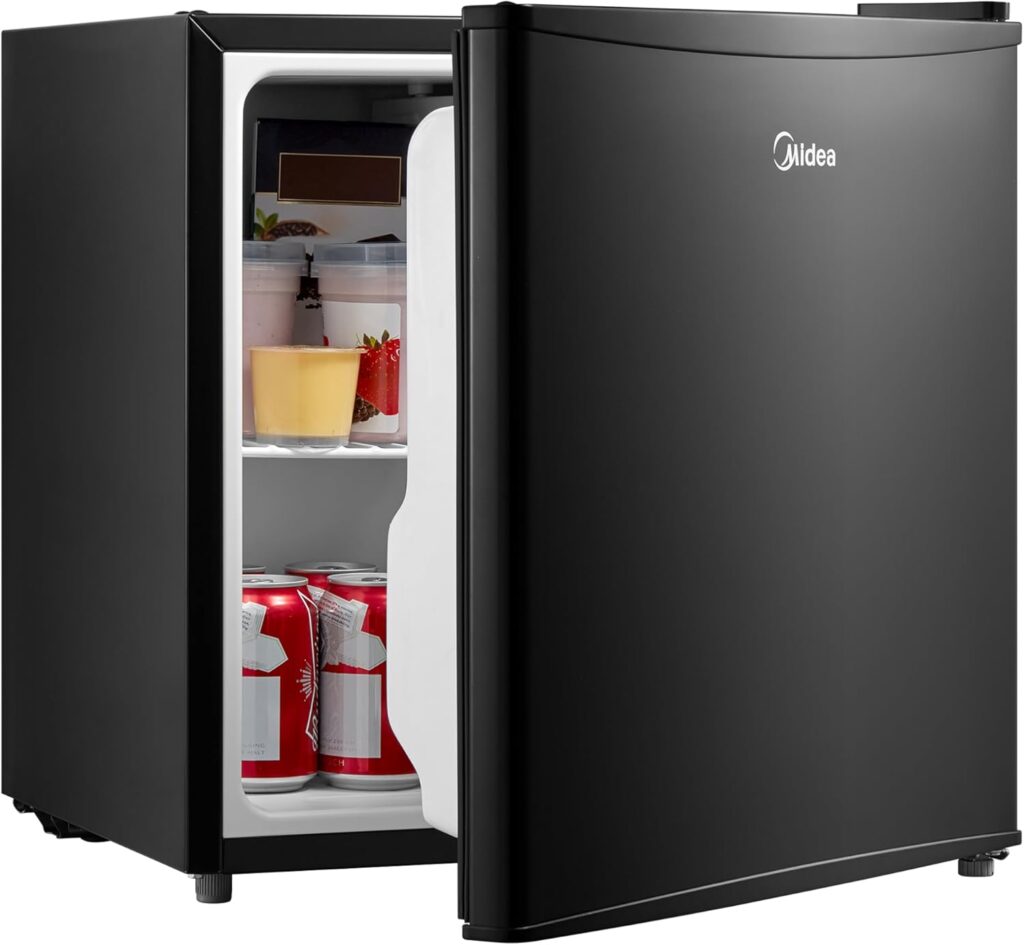
If floor space is your biggest concern, the Midea WHS-65LB1 makes much more sense than buying a 3-cubic-foot refrigerator and trying to squeeze it into a space that was never designed for it.
This model has a 1.6-cubic-foot capacity and measures approximately 18.6 inches wide, 17.7 inches deep, and 19.4 inches high. Midea lists it as Energy Star certified, with estimated annual energy consumption of 207 kWh.
The dimensions are the real story.
At roughly 19 inches tall, it is much easier to place on or under furniture than the taller 3-cubic-foot models.
Midea also gives it a reversible door and mechanical temperature control.
This is the type of refrigerator that makes sense when you don’t need to stock an entire week’s groceries.
Its 1.6-cubic-foot capacity is enough for personal drinks, snacks, small containers, and other essentials. The Energy Star certification is also useful for shoppers who pay attention to appliance energy consumption.
Midea lists the model’s noise level at 36 dBA on its U.S. product page.
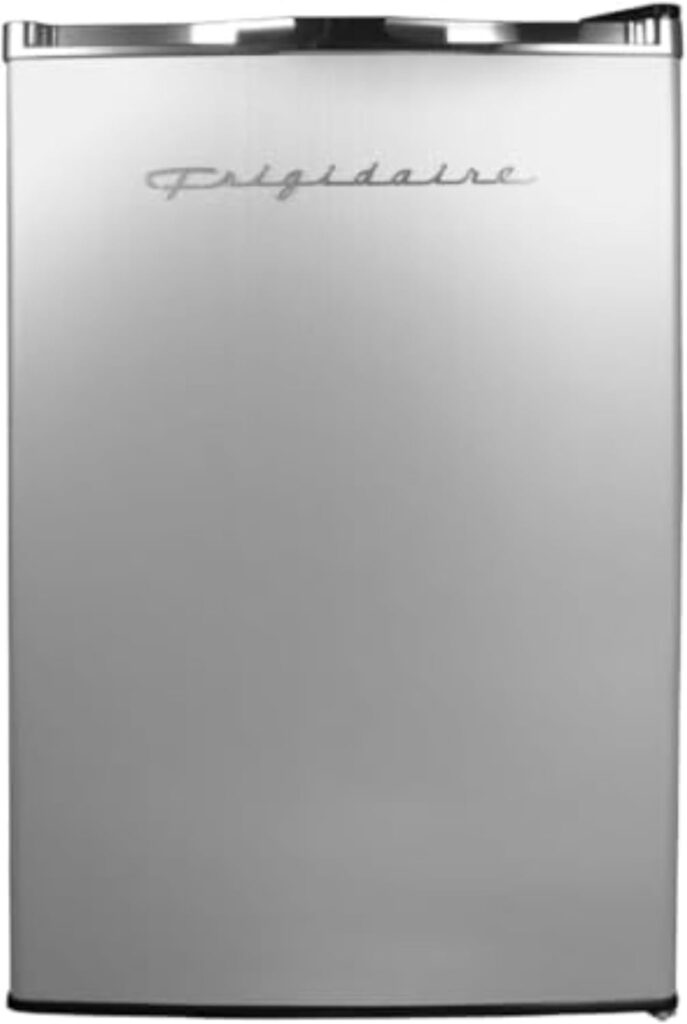
Some people use “mini fridge” to describe anything smaller than a standard refrigerator. If that’s you, the Frigidaire EFR492 is worth considering because its 4.5-cubic-foot capacity puts it toward the larger end of the compact refrigerator category.
Available product documentation lists approximately 4.5 cubic feet of capacity, with a chiller compartment, two glass shelves, door storage, a can dispenser, and front temperature control.
The main advantage is simple: more room.
A 4.5-cubic-foot refrigerator gives you considerably more flexibility for food and drinks than the 1.6- or 2.5-cubic-foot models.
That’s particularly useful if the refrigerator will be doing more than holding a few snacks.
The storage layout includes glass shelves and several door-storage areas. The product documentation also describes a dedicated chiller compartment for short-term frozen-item storage.
The model is also listed as Energy Star certified by Costco’s product information.
If your main goal is keeping cans and bottles cold, a conventional mini fridge isn’t necessarily the best tool for the job.
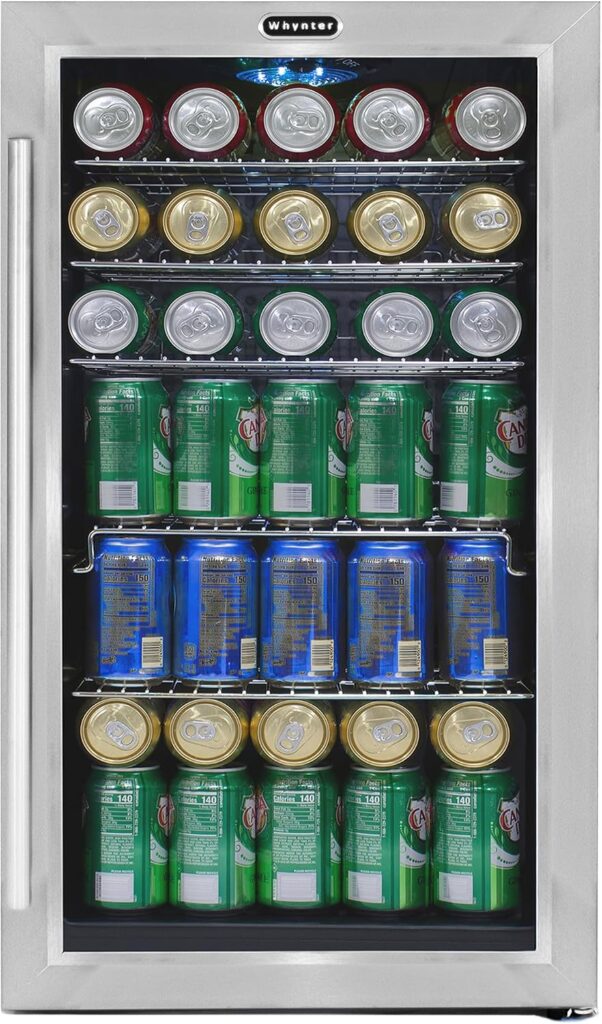
The Whynter BR-130SB is a dedicated beverage refrigerator with a 3.1-cubic-foot cabinet and capacity for up to 127 standard 12-ounce cans according to the manufacturer’s current specification page.
The interior is designed around beverages rather than mixed food storage.
It has five slide-out wire shelves, internal LED lighting, a reversible door, and fan-forced circulation. The manufacturer lists a temperature range from the high 30s to the mid-60s Fahrenheit.
The shelf layout makes it easier to organize a large number of cans than the typical shelves found in a food-oriented mini fridge.
The glass door also lets you see what’s inside without opening the refrigerator.
For an entertainment area, home bar, office, or dedicated beverage station, that design makes considerably more sense than sacrificing a normal refrigerator’s food-storage space.
Midea WHD-113FSS1 is a strong choice if you have room for a 3.1-cubic-foot refrigerator and want both refrigerator and freezer storage.
For extremely limited space, the Midea WHS-65LB1 is easier to fit.
The Midea WHS-65LB1 makes the most sense when compact dimensions and low listed noise are priorities.
The BLACK+DECKER BCRK25B offers a useful combination of food storage, beverage storage, adjustable shelves, and a freezer.
The Frigidaire EFR492 gives you substantially more capacity than tiny personal refrigerators.
The Whynter BR-130SB is the clear choice from this list because it is specifically designed for beverage storage and has five slide-out shelves.
The Midea WHD-113FSS1 is better suited to mixed food storage because of its 3.1-cubic-foot capacity and separate freezer compartment.
The Upstreman BR321 offers 3.2 cubic feet of capacity with a freezer, crisper drawer, adjustable temperature control, and reversible door, making it an attractive value-focused option.
For most shoppers who want a balance of refrigerator and freezer storage, the Midea WHD-113FSS1 is a strong all-around choice. Smaller spaces may be better served by the Midea WHS-65LB1, while beverage-only storage points toward the Whynter BR-130SB.
Around 2.5 to 3.2 cubic feet is a practical range for many dorm rooms because it provides meaningful food and drink storage without becoming as bulky as a full-size refrigerator.
Always check your dorm’s appliance rules and measure the space before purchasing.
Yes. A mini fridge can be useful in a bedroom for drinks, snacks, and small food items. Noise should be considered carefully, though, particularly if you are a light sleeper.
A compact 1.6-cubic-foot model can also be easier to position than a taller 3-cubic-foot refrigerator.
Some are. Energy consumption varies considerably by model, capacity, design, and usage.
Look for the Energy Star label and compare the manufacturer’s annual energy-use information rather than assuming every small refrigerator uses very little electricity.
Some do and some don’t.
Traditional compact refrigerators may have a small chiller or freezer compartment. Larger models can have a dedicated freezer section, while beverage refrigerators generally don’t have one.
Yes, provided the model is designed for normal indoor use and you follow its installation instructions.
Leave the recommended clearance around the appliance and avoid blocking ventilation areas. Also consider the refrigerator’s noise specification if it will sit close to your bed.
There isn’t a reliable single lifespan that applies to every mini fridge.
Longevity depends on the specific appliance, operating conditions, maintenance, ventilation, and usage. Rather than relying on a generic “X years” claim, check the manufacturer’s warranty and available reliability information for the exact model.
Not exactly.
A traditional mini fridge is designed for mixed storage such as food, drinks, and sometimes frozen items. A beverage refrigerator is optimized for cans and bottles, usually with shelving and temperature control designed around drinks.
The Whynter BR-130SB is an example of the latter.