
If you’ve started paying closer attention to what your cookware is actually made of, you’re not alone. More home cooks are asking the same question I get asked all the time: is my air fryer basket safe, or is it slowly flaking non-stick coating into my dinner?
That question is exactly why the best stainless steel air fryer models have become so popular. Stainless steel doesn’t scratch, chip, or off-gas the way older Teflon-style coatings can. It’s also one of the easiest materials to clean and one of the longest-lasting.
Based on my research into manufacturer specifications, trusted appliance review sites, and verified customer feedback, I put together this list of five stainless steel air fryers that genuinely earn a spot in your kitchen not just because they’re popular, but because they’re well-built, transparent about their materials, and priced for different budgets and household sizes.
Looking for even safer cooking options? Check out my guide to the 5 Best Non-Toxic Air Fryers, where I compare ceramic, glass, and PFAS-free models for healthier everyday cooking.
A stainless steel interior air fryer gives you a cooking surface that won’t degrade the way non-stick coatings can over time. Stainless steel is non-reactive, meaning it doesn’t leach chemicals into your food even at high, sustained heat which matters more in an air fryer than in a regular pan, since the hot air constantly circulates against every surface.
It’s also just practical. A stainless steel basket air fryer is usually dishwasher-safe, resists staining, and doesn’t scratch if you use metal tongs. For anyone trying to move toward oil-free cooking and fewer synthetic coatings in the kitchen, it’s one of the simplest upgrades you can make.
I didn’t test these air fryers myself. Instead, I compared manufacturer spec sheets, California AB 1200 chemical disclosures where available, and reviews from trusted appliance sites and verified Amazon buyers. I prioritised models that clearly state which parts are stainless steel versus coated, since a lot of marketing blurs that line. I also made sure this list covers different budgets and household sizes from a compact option for one or two people to a 30-quart model built for big families.
| Product | Capacity | Cooking Material | Basket | Best For | Rating | Price Range |
|---|---|---|---|---|---|---|
| Typhur Dome 2 | 5.6 Qt | Stainless steel interior + PFAS-free ceramic tray | Flat ceramic-coated, dishwasher-safe | Couples & small families | Highly rated (4.5★+) | $$$ Premium |
| Cosori Iconic Stainless Steel | 6.5 Qt | Stainless steel exterior/housing + PFAS-free ceramic coating | Removable, dishwasher-safe | Families | Highly rated (4.5★+) | $$ Mid-range |
| NuWave Bravo XL Pro | 30 Qt | Stainless steel cooking cavity, PFAS-free per manufacturer | N/A (toaster-oven style trays) | Large families & batch cooking | Well-reviewed (4.4★+) | $$ Mid-range |
| Kalorik MAXX | ~7 Qt | PFAS-free stainless steel cavity | Non-stick basket, dishwasher-safe | Singles & couples, budget shoppers | Well-reviewed (4.3★+) | $ Budget |
| Our Place Wonder Oven Pro | 14" wide (multi-rack) | Stainless steel racks & basket + PFAS-free ceramic bake pan | Stainless steel, dishwasher-safe | Large families, meal prep | Highly rated (4.5★+) | $$$ Premium |
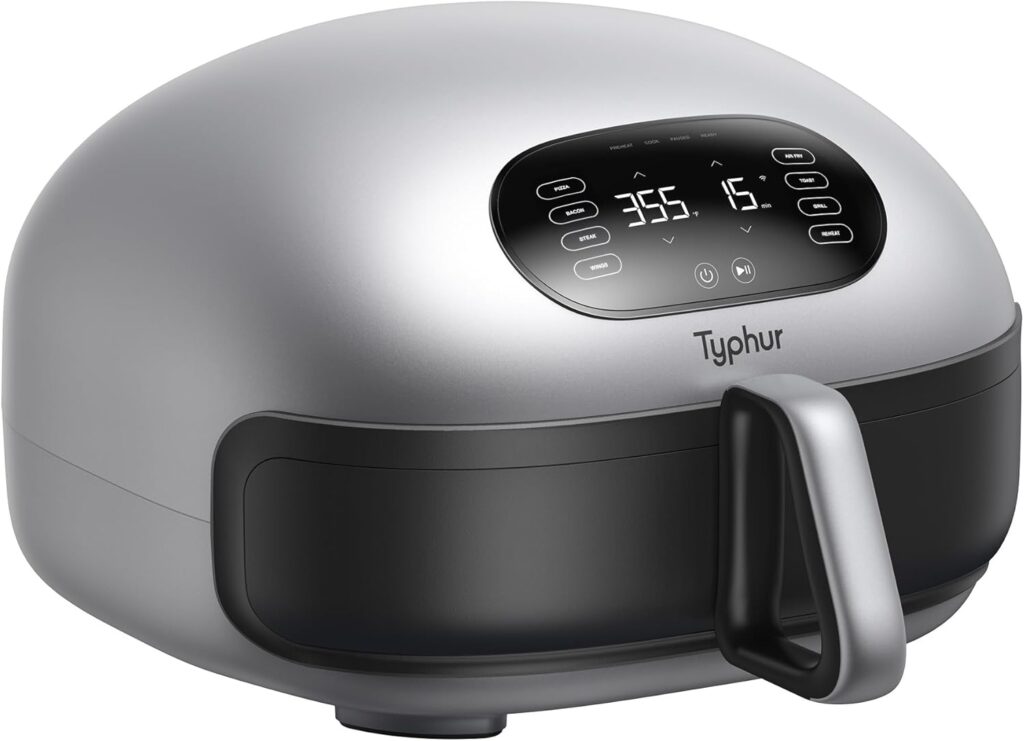
From everything I’ve compared, the Typhur Dome 2 stands out because of its dual top-and-bottom heating design. Instead of stacking food in a deep basket, it spreads everything into a single flat layer, which several reviewers noted cuts cooking time and removes the need to shake the basket halfway through.
The internal components are built from 304-grade stainless steel, and the ceramic-coated tray is confirmed PFAS-free, PTFE-free, and PFOA-free by the manufacturer. It includes 15 cooking presets, a self-cleaning mode, and app-guided cooking.
Small households who want even, single-layer crisping without flipping food constantly.
If I were buying one today for wings, pizza, or roasted vegetables, the wide flat design is the biggest differentiator versus a standard deep-basket fryer.
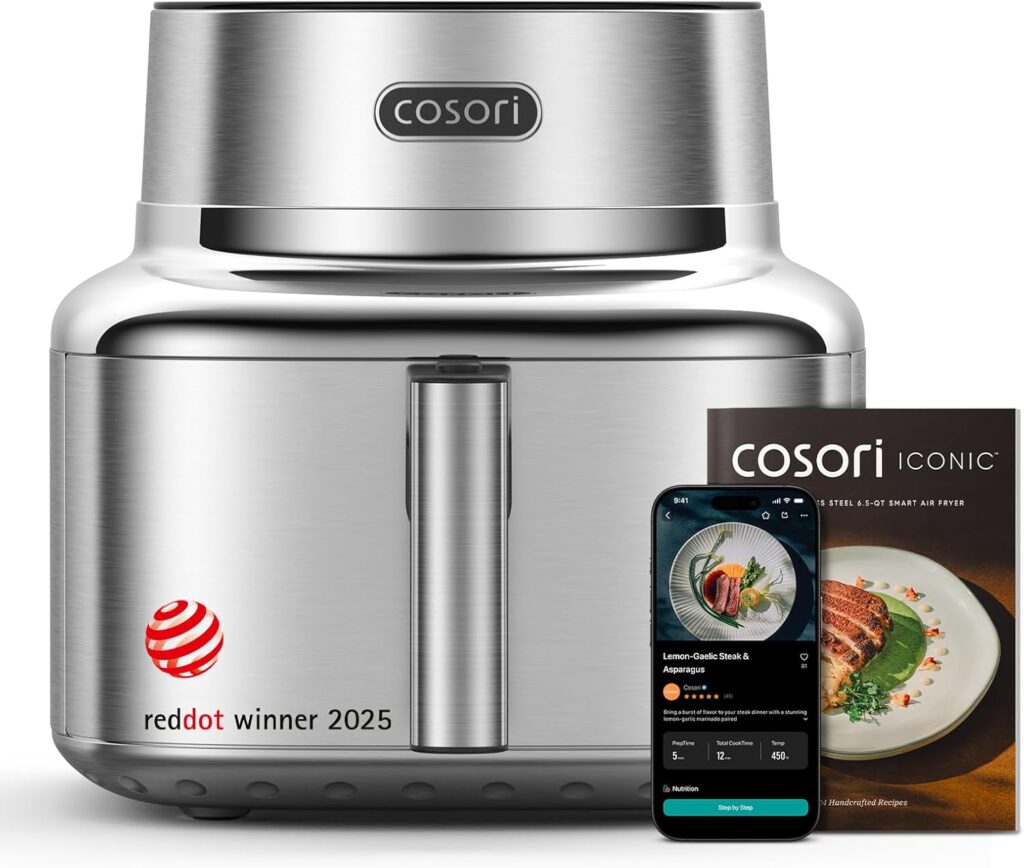
In my opinion, this is the easiest all-around recommendation on this list. It balances a sleek stainless steel design, a large enough basket for family portions, and app connectivity that a lot of budget models skip entirely.
Five adjustable fan speeds, a temperature range up to 450°F, and six cooking functions including air fry, roast, bake, dry, proof, and reheat. VeSync app integration adds guided recipes and remote start.
Families of four to five who cook multiple meals a week and want a dishwasher-safe basket.
After comparing today’s leading models, the combination of stainless steel housing, smart features, and a 6.5-quart capacity makes this one of the best value picks for most kitchens.
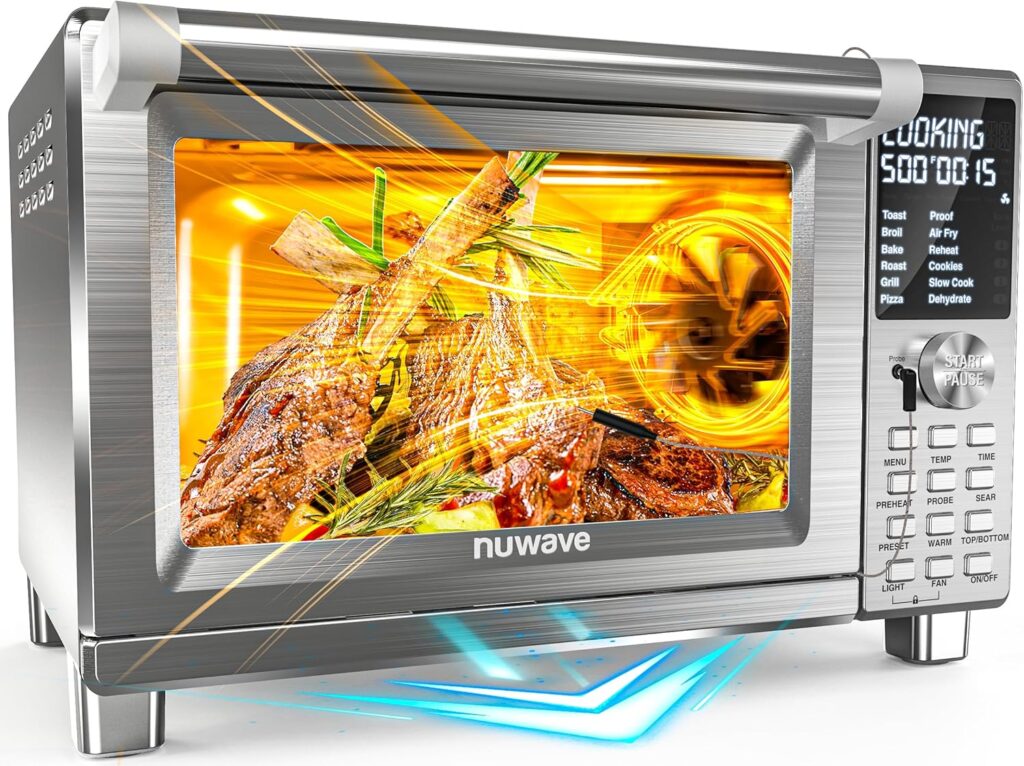
This is the pick I’d suggest for anyone who’s outgrown a basket-style fryer. The 30-quart stainless steel cavity can fit two 13-inch pizzas or a 10-pound chicken, which is a real jump in capacity from the 5 to 8-quart models most people start with.
Adjustable top and bottom heating elements (0–100% each), a temperature range from 50°F to 500°F in 5-degree increments, and no nonstick basket to worry about since the cavity itself is bare stainless steel.
Households of five or more, or anyone who regularly batch-cooks or meal preps.
A stainless steel cavity with no coated layer removes one of the biggest concerns people have about basket-style air fryers wearing out over time.
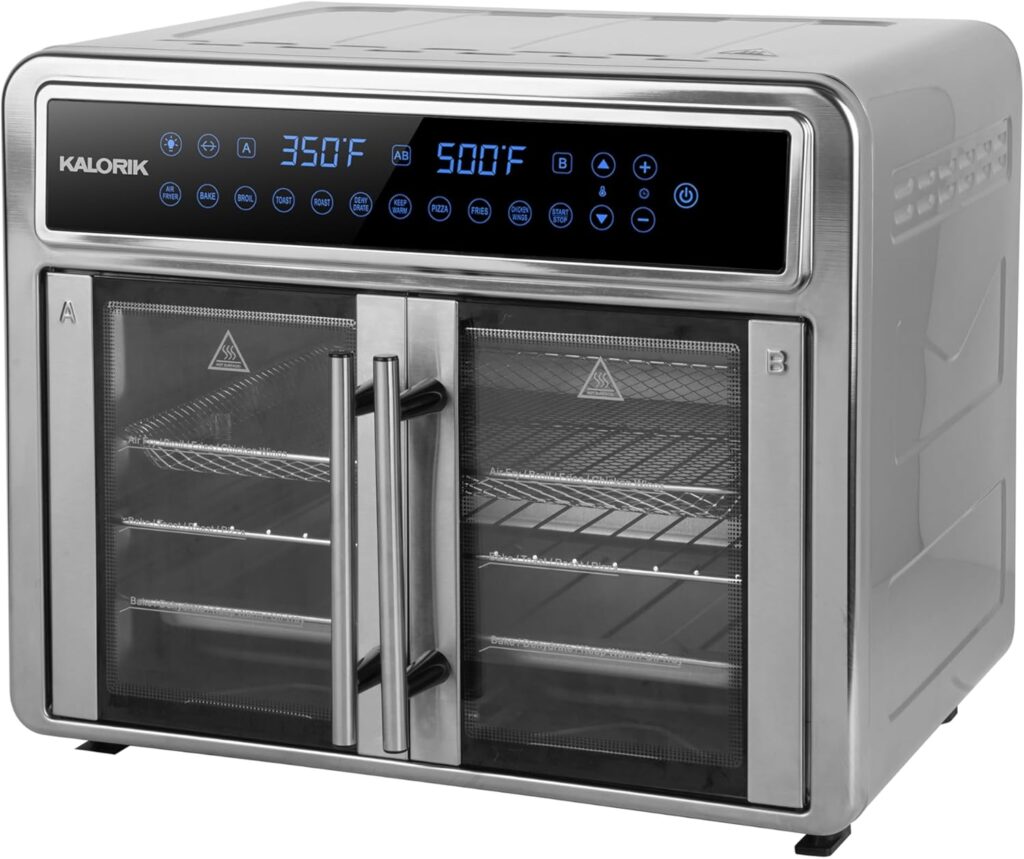
If I were buying my first non-toxic air fryer on a budget, this is where I’d start. It gives you a stainless steel cooking cavity without the price tag of the premium picks on this list.
Solid everyday performance for weeknight meals, a compact footprint that suits smaller kitchens, and straightforward one-touch controls without a steep learning curve.
People who want the safety benefits of stainless steel without paying for smart features they may never use.
It’s proof that a PFAS-free stainless steel air fryer doesn’t have to be expensive to be worthwhile.
From everything I’ve compared, this is the most versatile option here. It functions as an air fryer, oven, and dehydrator in one unit, with stainless steel racks and a basket that avoid coated surfaces almost entirely.
Eight cooking modes (air fry, bake, roast, toast, broil, dehydrate, proof, reheat), a digital touchscreen, and a bake pan with a ceramic nonstick coating over a cast-aluminum base that can be swapped for an all-stainless accessory.
Families who want to replace multiple countertop appliances with one larger, transparent-about-materials unit.
It’s one of the few models on the market where nearly every food-contact surface is stainless steel by default, with the coated bake pan being optional rather than required.
A stainless steel cooking basket won’t scratch, chip, or degrade with metal utensils the way a coated basket can. Non-stick baskets can still be a reasonable choice if the coating is verified PFAS-free, but bare stainless steel removes that variable entirely.
Some air fryers use stainless steel only for the outer housing while the actual stainless steel cooking chamber or basket is coated. Always check which parts touch your food, not just what the outside looks like.
Ceramic coatings can be a genuinely safe, PFAS-free alternative to Teflon, but they do wear down over time with regular use, similar to ceramic stovetop cookware.
Glass is inert and easy to verify visually, which is why some brands pair it with stainless steel accessories. It’s heavier and can be less impact-resistant than stainless steel, though.
A “PFAS-free stainless steel air fryer” claim should be confirmed by the manufacturer directly, ideally alongside a PTFE-free and PFOA-free statement, since a product can be PFOA-free while still containing other PFAS compounds.
Smaller households generally do well with 5 to 7-quart models, while families of four or more usually want 6.5 quarts or larger. Higher wattage generally means faster preheating. Nearly all the models above have dishwasher-safe baskets, which matters a lot for regular use.
Bare stainless steel and glass are generally considered the most durable, non-reactive options. PFAS-free ceramic is a solid step up from traditional Teflon but doesn’t last quite as long under daily wear.
Stainless steel resists scratching and lasts the longest under daily use. Ceramic coatings offer good non-stick performance but wear down gradually. Glass containers are the easiest to visually verify but can be heavier and less impact-resistant. Many of the best models on the market today combine two of these materials rather than relying on just one.
Start with your household size, then check whether the basket, tray, or cavity is actually stainless steel versus just the housing. Confirm any PFAS-free claim directly from the manufacturer’s product page or chemical disclosure, and match the capacity and price to how often you’ll realistically use it.
Don’t assume “stainless steel” in the product name means every food-contact surface is stainless steel — check the specs. Don’t rely on “PFOA-free” alone as proof of a non-toxic basket. And don’t oversize your air fryer if you’re cooking for one or two people, since larger units take longer to preheat.
Stainless steel air fryers are generally more durable and non-reactive than non-stick models, making them a strong choice if you want a cooking surface that won’t degrade over years of use.
Bare stainless steel is considered non-reactive and safe at cooking temperatures, but always confirm which specific parts of the air fryer are stainless steel versus coated.
Models like the Cosori Iconic Stainless Steel and NuWave Bravo XL Pro use stainless steel for the basket or cooking cavity, though the exact grade and coverage varies by model.
Stainless steel doesn’t rely on a coating that can wear down or chip, which many people consider a safer long-term option compared to traditional non-stick surfaces.
Models with bare stainless steel or glass food-contact surfaces, verified PFAS-free and PTFE-free by the manufacturer, are generally considered the healthiest options.
Yes, especially if you cook frequently. Avoiding PFAS coatings reduces the risk of chemical exposure from a scratched or degraded non-stick surface over time.
The NuWave Bravo XL Pro and Our Place Wonder Oven Pro both offer large capacities suited to bigger households and batch cooking.
In many cases, yes. Bare stainless steel tends to last longer than ceramic coatings, though ceramic can still offer good non-stick performance for everyday cooking.