
A few years ago, “non-stick” just meant your eggs wouldn’t stick to the pan. Nobody asked what was actually in the coating.
That’s changed. More people are asking what their cookware is made of, and for good reason. Traditional non-stick coatings can contain PTFE and PFAS, chemicals that have been linked to health concerns when the coating overheats, scratches, or breaks down over time.
If you’ve been searching for the best non-toxic air fryer, you’ve probably noticed the market is flooded with vague claims. “Healthy,” “safe,” and “eco-friendly” get slapped on packaging without much explanation. Based on my research into manufacturer disclosures, safety certifications, and real owner feedback, I’ve narrowed things down to five air fryers that actually back up their claims with real materials: ceramic, glass, and stainless steel.
This guide covers what makes an air fryer genuinely non-toxic, my top five picks across different budgets, and how to avoid the mistakes most shoppers make when buying one.
If durability is your priority, don’t miss my guide to the 5 Best Stainless Steel Air Fryers, featuring top-rated models with stainless steel interiors or baskets for long-lasting performance.
Standard non-stick air fryer baskets are usually coated with PTFE (often sold under the name Teflon). When that coating is heated above roughly 500°F, scratched, or worn down over years of use, it can release fumes and particles into your food and kitchen air.
A PFAS-free air fryer, Teflon-free air fryer, or one built with ceramic, glass, or stainless steel avoids that risk almost entirely. These materials don’t rely on a fragile coating that degrades. That means fewer worries about what’s leaching into your family’s dinner, and a cooking surface that holds up for years instead of months.
In my opinion, this matters most for families who use their air fryer daily. The occasional use of a scratched non-stick pan probably isn’t a crisis. But an appliance you rely on every night for years is a different story, and that’s exactly why demand for non-toxic cooking appliances has grown so quickly.
I didn’t test these air fryers myself. Instead, I compared manufacturer material disclosures, safety certifications (like PFAS-free and BPA-free claims), and consensus feedback from verified buyers and trusted review sources. Here’s what I looked for:
| Product | Material | Capacity | Best For |
|---|---|---|---|
| Typhur Dome | PFAS-free ceramic, stainless interior | 8 quarts | Best overall / families |
| Ninja Crispi | Borosilicate glass baskets | 4–5 quarts | Best glass option |
| Our Place Wonder Oven | Stainless steel | 10–31 quarts | Best for families |
| COSORI TurboBlaze | PFAS-free ceramic | 6 quarts | Best everyday value |
| Bella 6Qt Slim | Certified ceramic | 6 quarts | Best budget pick |
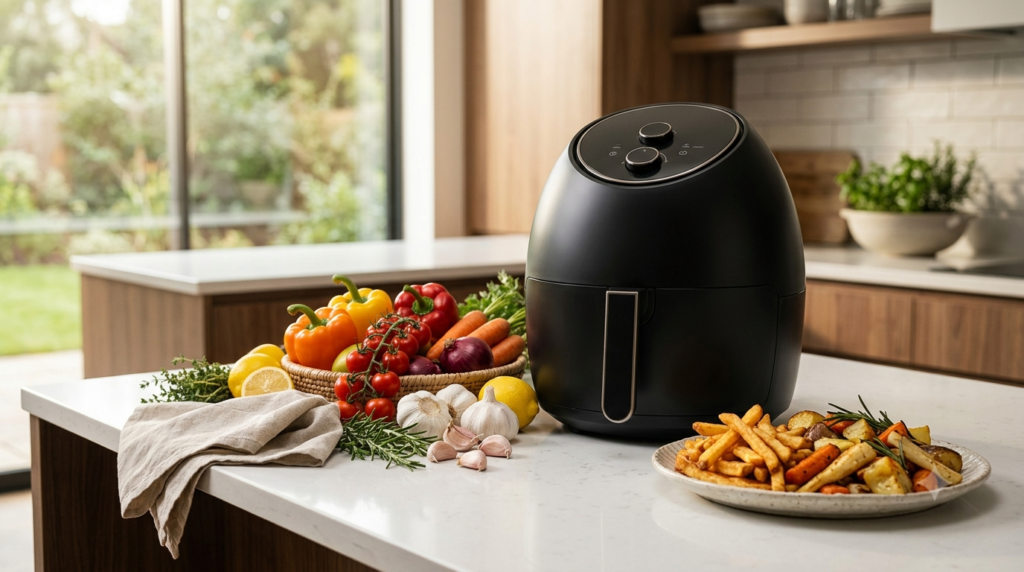
Why I Recommend It If I were buying one today for a family that cooks often, this is where I’d start. The Typhur Dome uses an FDA-certified ceramic coating confirmed to be free of PFAS, PTFE, PFOA, and BPA, paired with a stainless steel interior. It’s one of the more transparent brands I came across when comparing material disclosures.
Key Features
Best For Families who cook large batches regularly and want a genuinely PFAS-free ceramic air fryer without compromising on capacity.
Why It Stands Out Most air fryers ask you to choose between performance and safety. This one doesn’t. The dual heating design solves the common ceramic air fryer complaint of uneven crisping, while the material transparency gives real peace of mind.
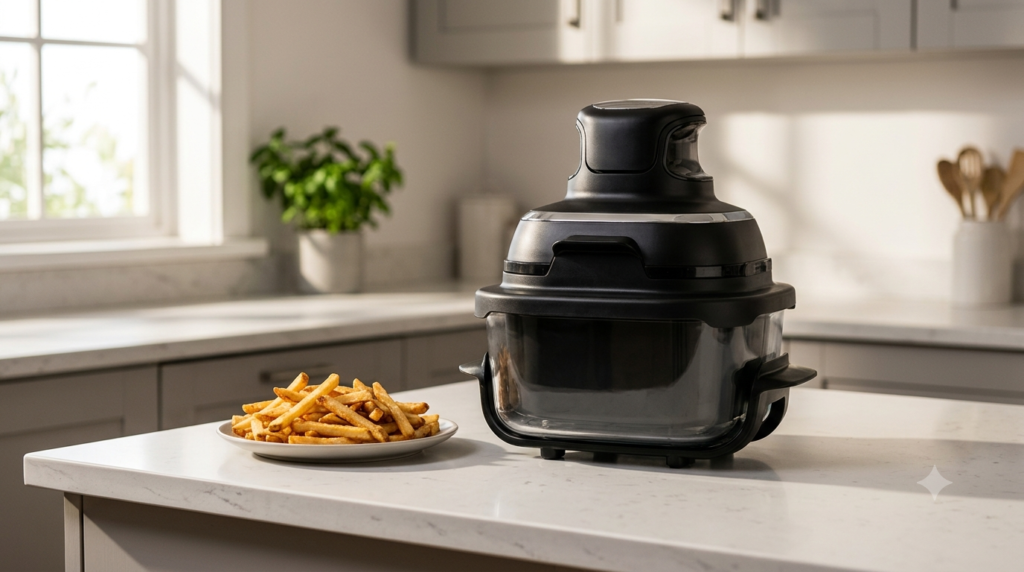
Why I Recommend It After comparing today’s top glass air fryer options, the Ninja Crispi stood out for one simple reason: you can see exactly what’s cooking, and the containers double as storage. It uses borosilicate glass baskets that are BPA-free and PFAS-free.
Key Features
Best For Couples, small households, or anyone who wants a glass air fryer that goes straight from the counter to the fridge.
Why It Stands Out It’s rare to find an appliance that solves cooking and food storage in one step. The glass baskets also mean there’s no coating to wear down, ever, which makes long-term safety simple to understand.
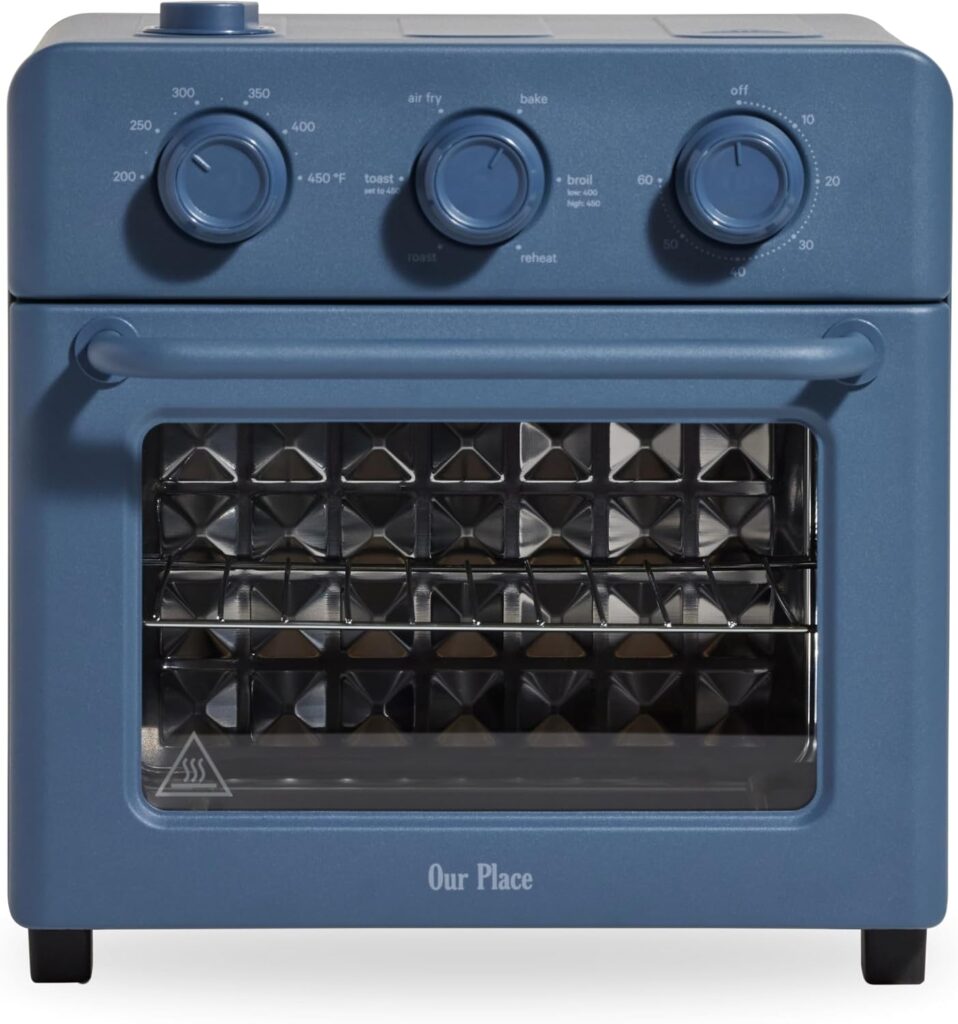
Why I Recommend It In my opinion, this is the strongest pick for larger families who need serious capacity. Our Place confirms the interior is stainless steel with all food-contact surfaces free of PFAS, PTFE, lead, and cadmium. It’s built more like a countertop oven than a basket-style fryer.
Key Features
Best For Best air fryer for families who want an all-in-one oven replacement, not just a basket fryer.
Why It Stands Out The steam function is a genuine standout. Combined with a mostly bare-metal interior, it gives you oven-level versatility with a much stronger materials story than a typical countertop oven.
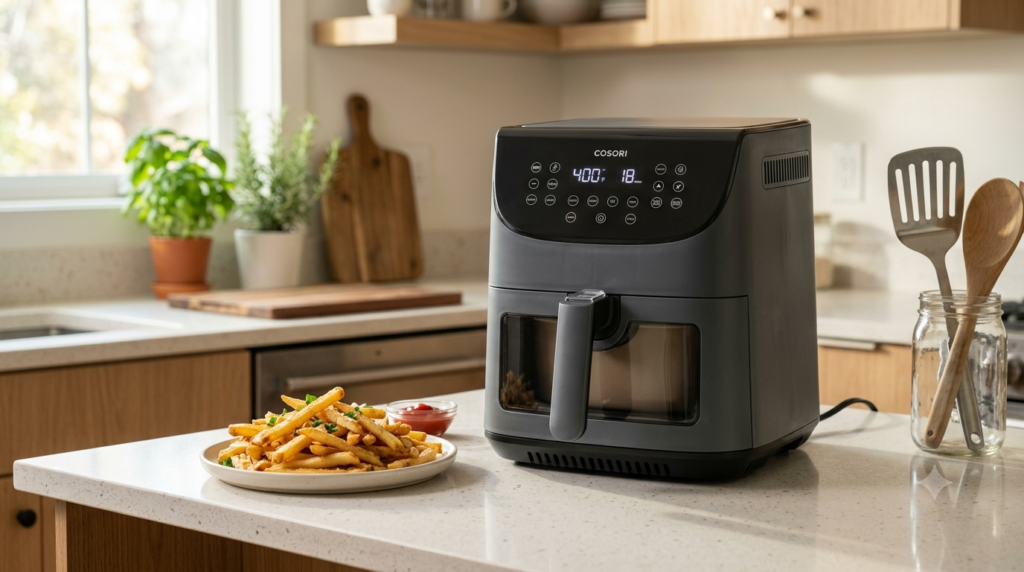
Why I Recommend It If you want strong everyday performance without the premium price tag, this is the one I’d point you toward. It uses a PFAS-free ceramic coating and pairs it with smart features that make weeknight cooking easier.
Key Features
Best For Everyday cooks who want a reliable, mid-priced healthy air fryer without sacrificing smart features.
Why It Stands Out It hits a sweet spot: certified ceramic materials, a manageable price, and enough functionality to replace two or three other kitchen gadgets.
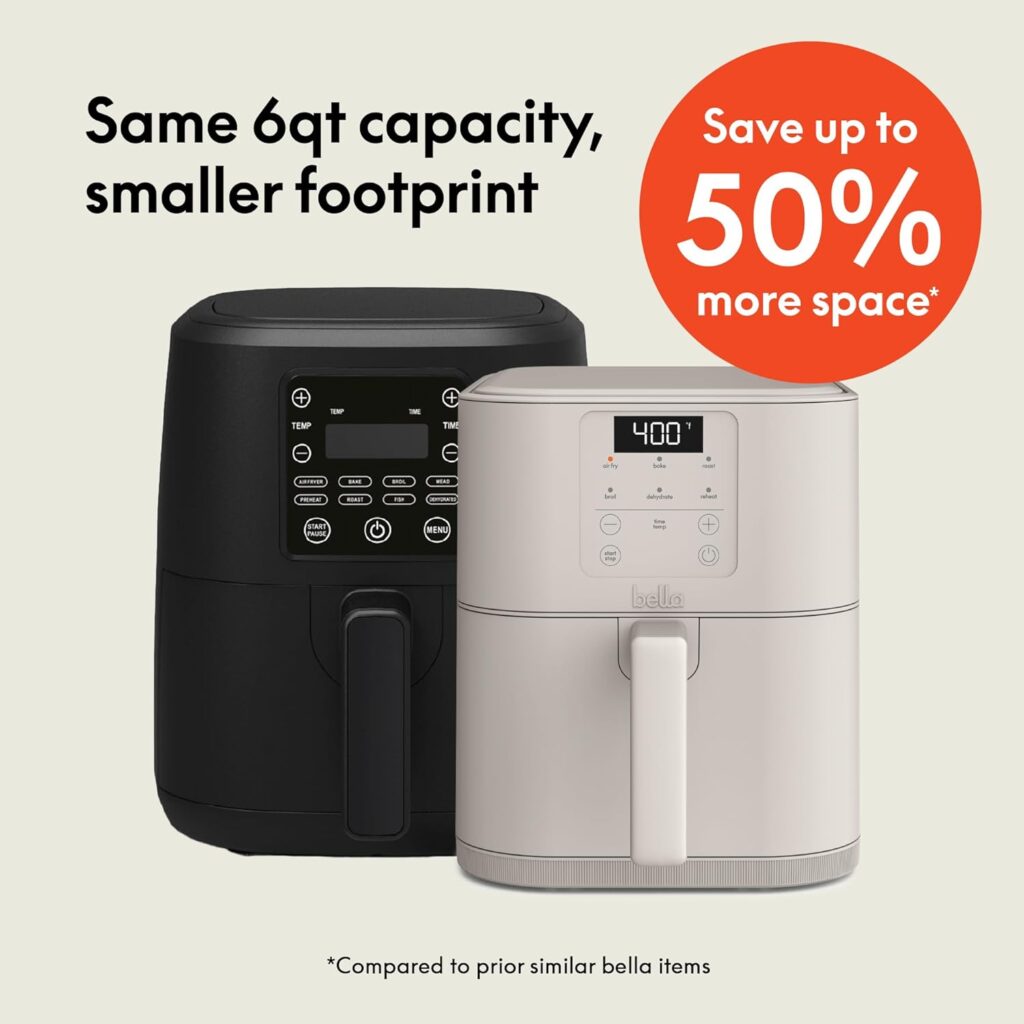
Why I Recommend It Non-toxic doesn’t have to mean expensive. Based on my research, the Bella 6Qt Slim is the most accessible entry point into certified ceramic cooking, without cutting corners on the materials that matter.
Key Features
Best For Anyone buying their first safe air fryer or upgrading from an old, scratched non-stick model on a tighter budget.
Why It Stands Out It proves you don’t need to spend hundreds of dollars to get a genuinely non-toxic option. For a starter appliance, this is where I’d tell a friend to begin.
Start with the food-contact material. This is the single most important factor. Look specifically for ceramic, glass, or stainless steel, and confirm the brand states the coating is PFAS-free and PTFE-free, not just “non-stick.”
Check for real certifications. Reputable brands reference third-party testing or disclosures such as FDA certification, Prop 65 compliance, or independent lab results. Vague wellness language without specifics is a red flag.
Match capacity to your household. A 4-quart model works for one or two people. Families of four or more will likely want 6 quarts or more, or a larger oven-style unit like the Wonder Oven.
Consider interior plastic parts. Even if the basket is safe, heated plastic components elsewhere in the unit can release fumes over time. Fewer plastic parts near the heating element is generally better.
Think about long-term durability. Glass and stainless steel don’t degrade the way coatings can. Ceramic is a strong safer alternative to traditional non-stick, but like any coating, it can wear down after a few years of heavy use.
What makes an air fryer non-toxic? A non-toxic air fryer uses food-contact materials like ceramic, glass, or stainless steel instead of traditional PTFE (Teflon) coatings, and avoids PFAS, PFOA, and BPA in the parts that touch your food.
Are ceramic air fryers actually safe? Yes, when the ceramic coating is verified PFAS-free and PTFE-free. Ceramic coatings use a sand-derived, silica-based process instead of fluorinated chemicals, though they can wear down faster than glass or stainless steel over years of heavy use.
Is stainless steel better than ceramic for air fryers? Stainless steel doesn’t have a coating that can degrade, making it the most durable long-term option. Ceramic offers better non-stick performance out of the box but has a shorter lifespan than bare stainless steel.
Do glass air fryers cook as well as basket-style models? Yes, based on user consensus. Glass air fryers like the Ninja Crispi perform comparably for most everyday meals, with the added benefit of using the same container for storage.
What should I avoid in an air fryer if I care about toxins? Avoid unverified “non-stick” coatings without clear PFAS-free disclosure, heavy interior plastic near the heating element, and off-brand ceramic products without third-party testing.
If I were replacing my own air fryer today, I’d stop chasing the word “non-toxic” on the box and start checking the actual materials list. Ceramic, glass, and stainless steel each solve the problem in a different way, and the right pick really comes down to your household size and budget.
For most families, the Typhur Dome offers the best combination of safety and performance. If you’re working with a tighter budget, the Bella 6Qt Slim gets you into certified ceramic cooking without the premium price. Either way, an air fryer without harmful chemicals doesn’t have to be complicated to find, once you know exactly what to look for.